Blog · Cybersecurity
Middle East Conflict and Cyber Fraud: Why Fake Hotlines, Vishing and Phishing Are Especially Dangerous Right Now
Published in March 2026 · Verinox Forensik
Geopolitical crises don't just trigger political and economic uncertainty. They also create ideal conditions for cybercriminals. When people act under time pressure, rebook travel, struggle to assess the situation and risks, or want to react quickly out of concern, their susceptibility to fraud increases significantly. This dynamic is currently evident: the conflict in the Middle East is being deliberately used as a hook for phishing, vishing and fraudulent fake hotlines.
What makes these attacks particularly insidious is that many of them don't look like classic cybercrime. They don't always come in the form of obvious malware, but rather as seemingly helpful customer service, urgent notifications, security warnings or apparently legitimate information about bookings, payments or donations. That's exactly why they work so well. The attack doesn't start technically — it starts psychologically.
How current crises are exploited by fraudsters
In tense situations, affected people often immediately look for solutions. Anyone needing to rebook a flight tries to reach a hotline quickly. Anyone reading headlines about rising oil prices or an escalation reacts sensitively to messages about energy contracts, security situations or supposedly urgent measures. Anyone seeing human suffering is more willing to donate spontaneously. These are exactly the points where fraudsters strike.
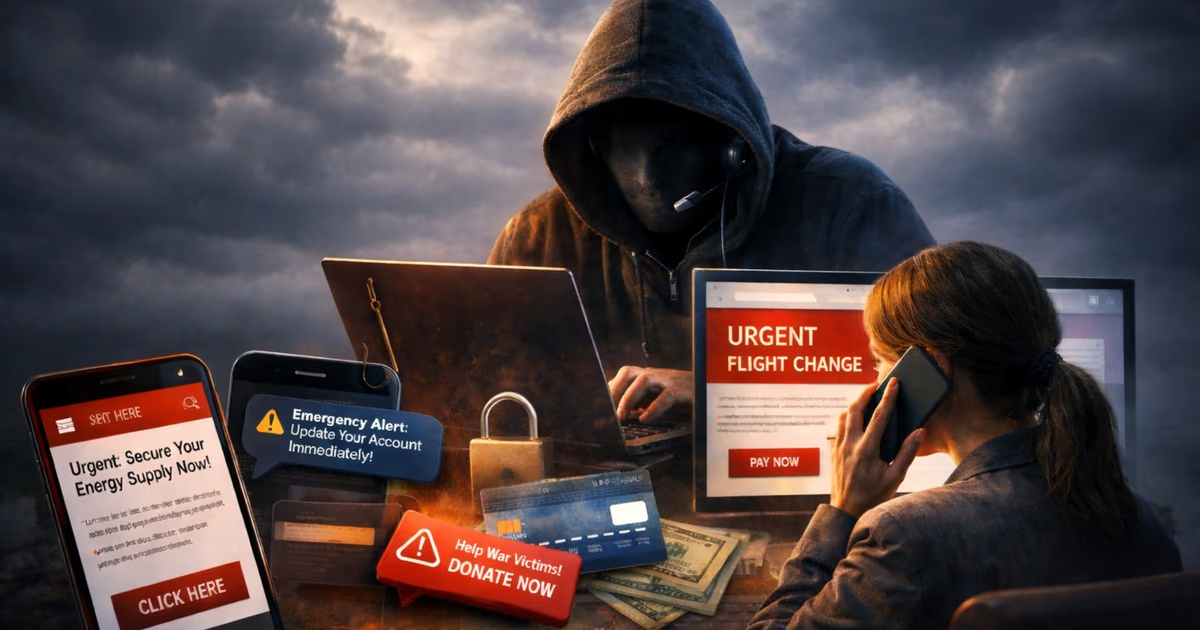
A typical pattern involves fake service hotlines. Users search for an airline, a travel portal or a provider, come across a manipulated number and end up with criminals instead of real support. They are then asked for supposed rebooking fees, security payments or 'necessary verifications'. In particularly dangerous cases, the perpetrators even attempt to gain remote access to devices. What starts as a seemingly simple service request can become a real security incident within minutes.
Crisis-related phishing emails and SMS messages are also a growing problem. Subject lines referencing flight cancellations, security warnings, energy prices or appeals for help appear credible because they connect to current news. Recipients are supposed to click links, enter credentials, open attachments or initiate payments. Many of these messages are linguistically much more professional today than just a few years ago, making them harder to recognize.
Why these attacks are so successful
The decisive factor is not just technology, but social engineering. Cybercriminals deliberately exploit fear, uncertainty, helpfulness and time pressure. In geopolitical crises, an environment arises in which people are more likely to act impulsively. Those who believe a flight must be rebooked immediately or a payment is necessary are less likely to critically check whether the source, link or call is actually legitimate.
Additionally, fraudulent content today often appears very convincing. Emails look professional, websites imitate well-known brands with deceptive accuracy, phone numbers appear credible, and even fake SMS messages are often designed to be barely recognizable as mass fraud. This is exactly what makes this wave so dangerous: it doesn't just affect careless users, but also people who are normally very attentive.
How victims can recognize current fraud attempts
A warning signal is always present when pressure to act is created. Phrases like 'confirm immediately', 'rebook urgently', 'security payment required' or 'final deadline' are designed to prevent you from thinking. Requests to directly enter sensitive data or spontaneously transfer money are also clear indicators of risk.
Numbers that don't come directly from the provider's official website but have been taken from ads, search results or forwarded messages are equally critical. Anyone who simply calls the first hotline they find in a stressful situation risks ending up with a fraudster. The same applies to links in emails or SMS messages that supposedly lead to bookings, invoices, donations or security information.
What individuals and companies should do now
The most important step is to consciously slow down. Especially in times of crisis, what protects you is not speed but control. For travel or flight matters, contact should always be made directly through the provider's official website, app or existing customer account. Numbers from search ads or unknown sources should never be used without verification.
For emails and SMS messages referencing war, travel, energy prices or donations: don't click links, don't open attachments and don't enter credentials before clearly verifying authenticity. When in doubt, the safe approach is always to go directly to the company's or organization's official website.
For companies, this topic is particularly relevant because such attacks can quickly impact the organization through personal devices, work phones or business accounts. What initially appears to be a 'private' travel or donation matter can ultimately affect credentials, payment processes or internal communication channels. Therefore, current fraud patterns related to geopolitical crises must be included in awareness measures, internal notices and security processes.
Why this is also relevant for incident response and digital forensics
Such cases are not just consumer protection issues. They are frequently the entry point for serious security incidents. When credentials are stolen, devices compromised, payments initiated or communication channels misused, more than just good advice is needed. Quick response, clean evidence preservation and structured analysis become critical.
This is exactly where the relevance of professional incident response and digital forensics becomes apparent. It's about containing attacks, examining affected systems, securing evidence, reconstructing the sequence of events and preventing further damage. OSINT analyses can help better classify fraudulent domains, fake identities or related attack patterns. When payments have been shifted to digital channels, the traceability of money flows also gains importance.
Conclusion
The current Middle East conflict demonstrates once again how quickly real crises are translated into digital fraud scenarios. Cybercriminals react opportunistically, exploit attention and uncertainty, and package their attacks in seemingly plausible everyday situations. Fake hotlines, vishing and crisis-related phishing are therefore not a marginal phenomenon, but an acute risk.
Those who want to protect themselves must above all do one thing: pause, verify sources and not act under pressure. For companies, this additionally means taking such developments seriously not only in terms of communication but also in terms of security. Because a seemingly harmless fraud attempt can quickly become a real security incident.